
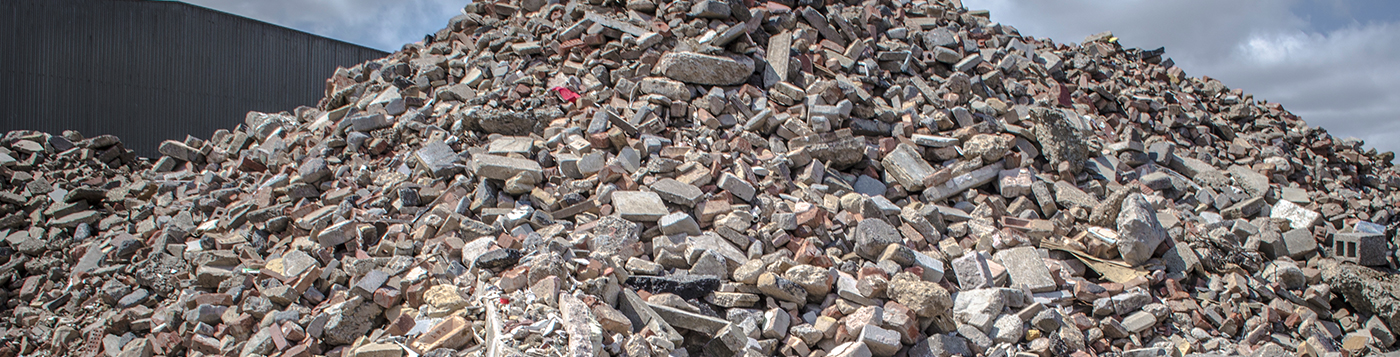
Construction Waste Recycling
The massive accumulation of construction waste continuously occupies scarce land resources, forming "garbage mountains." Simultaneously, it releases dust, exacerbating air pollution (PM2.5/PM10), and heavy metals and alkaline leachates seep into the soil and groundwater, causing ecological damage. More seriously, loose accumulations easily induce landslides, flammable components cause fires, sharp fragments threaten personal safety, and bury over 100 million tons of renewable concrete aggregate and metal resources. Achieving a resource recovery rate of over 90% through scientific crushing and sorting processes is a key path to solving these environmental, safety, and resource dilemmas.

The recycling and reprocessing process of construction waste begins with initial sorting and sealed transportation to the processing plant. Upon arrival, pre-treatment occurs, including weighing and registration, manual or mechanical removal of large foreign objects and hazardous waste, and the use of magnetic separators to separate and recover ferrous metals such as reinforcing bars.
Subsequently, the material enters the core crushing stage, typically coarsely crushed by a jaw crusher followed by fine crushing into uniform particles by an impact or cone crusher. Strict dust control is required throughout the process. The crushed material is then graded by particle size using a vibrating screen, and subsequently passes through an air classifier to separate lightweight impurities (plastics, wood, etc.), fine magnetic separation to remove residual iron filings, and optional water washing or eddy current separation for further purification.
The resulting clean, recycled coarse and fine aggregates are stored according to specifications and can be widely used in road base fillers, recycled building materials (such as permeable bricks and blocks), mortar, or backfilling projects. The sorted metals are directly recycled, the lightweight combustibles can be disposed of for energy, and the very small amount of unusable residues are safely landfilled. This process aims to achieve efficient resource utilization of construction waste (resource utilization rate can reach over 90%), achieving the goals of reduction, resource utilization, and harmlessness.
Mobile crushing station possess flexible mobility, adapt to various complex environments, and provide convenient and rapid processing of construction waste.