
04 December 2025
Mobile crushing Stations, with their modular design, intelligent operation and maintenance, and green and low-carbon core advantages, demonstrate a wide range of application scenarios and significant technological competitiveness in fields such as mining and construction waste recycling.
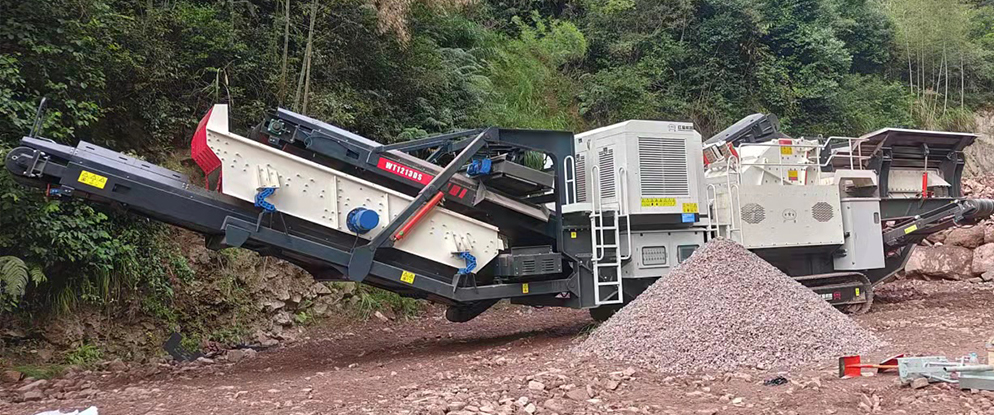
Crawler type mobile crushing Station can adapt to rugged terrain and directly enter mining areas to achieve "crushing wherever the raw materials are," reducing transportation costs and improving efficiency. For example, in mountainous areas, modular combinations of jaw crushers and cone crushers can meet the fine processing needs of high-hardness ores (such as granite).
Mobile crushing Station use multi-stage screening and light material separation technologies to convert concrete, bricks, and other waste into recycled aggregates, achieving a resource recovery rate of 80%-100%. They accurately separate reinforcing steel and impurities, achieving a recycled aggregate purity of over 95%.
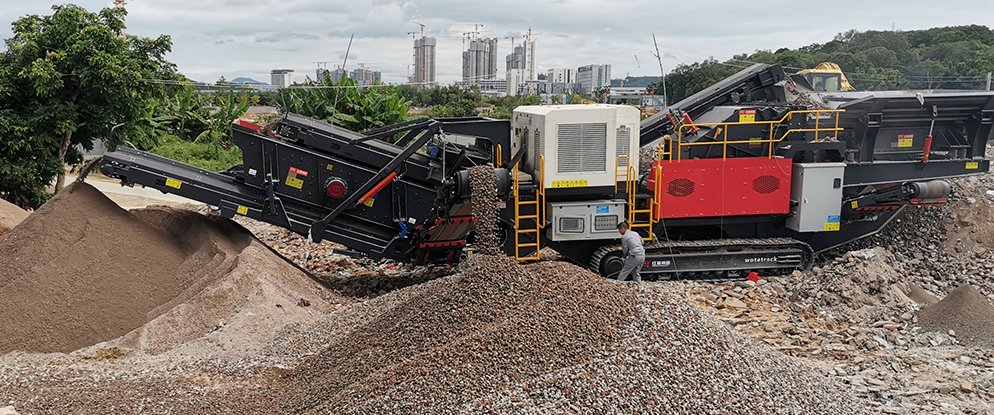
Standardized interfaces allow for quick assembly and disassembly of jaw crushers, screening modules, etc., supporting customized processes such as "crushing before screening" or "screening before crushing." The crawler type mobile crushing station can be deployed within 4 hours, with a capacity ranging from 100-250 t/h.
IoT technology monitors equipment status in real time (such as bearing temperature and crushing chamber pressure), combined with AI algorithms to predict faults.
Utilizing hydraulic drive and wear-resistant materials to reduce energy consumption, the crawler type mobile crushing Stations reduces carbon emissions through energy-saving design, with dust emissions <10mg/m³ and noise <75dB.
Through technological innovation and scenario adaptation, mobile crushing stations are becoming key equipment for efficient resource utilization and the circular economy.